Patient Cost Estimation

Enhanced transparency and payment acceleration.

Transparency Starts with Accuracy


The necessary estimate checklist

If you are seeking true change in your revenue this year, you’ll want to commit to a modern technology platform that can assist your journey. A modern platform built with the top issues of today's RCM landscape (not designed forever ago) is less of a disruption than you might think; especially the way it can increase your current revenue overall. To help you pick the right partner, your software should include the following:

Real-time benefit eligibility verification

checked-icon

Patient benefit verification in person or schedule before appointment

checked-icon

Check deductible or out-of-pocket remaining anytime

Accurate, dependable estimates

checked-icon

Contract management tools

checked-icon

Patient demographics integration with EHR

checked-icon

Easy-send patient notification via HIPAA-compliant text and/or email

checked-icon

In-network or out-of-network expectation listed

checked-icon

Complex capabilities for multiple treatments, multiple providers, DME, etc.

checked-icon

Discounts, carve outs and modifiers accounted for in cost

Automation

checked-icon

Automatic patient eligibility verification days before appointments

checked-icon

Automatic creation of simple & complex estimates

checked-icon

Bulk patient notification via HIPAA-compliant text and/or email

Up-front payment & transparency

checked-icon

Easy pay directly from HIPAA-compliant text or email

checked-icon

Simple patient cost breakdown

checked-icon

Downpayment percentage or dollar amount set up

checked-icon

Payment EHR integration

checked-icon

Payment terms, escalators, lag time management

checked-icon

Responsive, U.S. based support


The future of transparency

Healthcare billing is notoriously slow to change, but with new technology resources out there, change doesn't have to be a high hurdle. You know what you need to increase patient collection right away; find a technology-driven, automated solution that is built for speed and accuracy, and grows with you.

Focus on increasing revenue and transparency through:

document icon

Reimbursement adjudication logic

file icon

Timely payment expectations

cycle icon

Clear payment conversations

web browser icon

Estimates saved to EHR

As you prepare for patient cost transparency, keep in mind that you don’t have to do it alone — there are many software tools available to help you along the way.

illustration

Collect earlier. Chase less.

Patient payments are easiest to collect before they become back-end work. Providers send an average of 3.3 billing statements before receiving payment, and after the visit, they can expect to collect only 50–70% of the balance.

Rivet Patient Pricing helps practices move payment conversations to the right moment: before care. With accurate, HIPAA-compliant estimates, real-time eligibility insights, and easy prepayment options, teams can set clear expectations, help patients understand what they owe, and reduce the costly follow-up that happens after the appointment.

As one Rivet customer and orthopedic CEO put it: “It makes having the financial conversation really easy and keeps the patient informed… helped us get better at collecting from patients up front.”

With Rivet Patient Pricing, practices can give patients the cost clarity they expect while creating a faster path to collecting the revenue they’re owed.

Start offering patient cost clarity now.

How practices drive revenue via Rivet's patient cost estimates

Rivet Patient Pricing goes beyond cost estimates

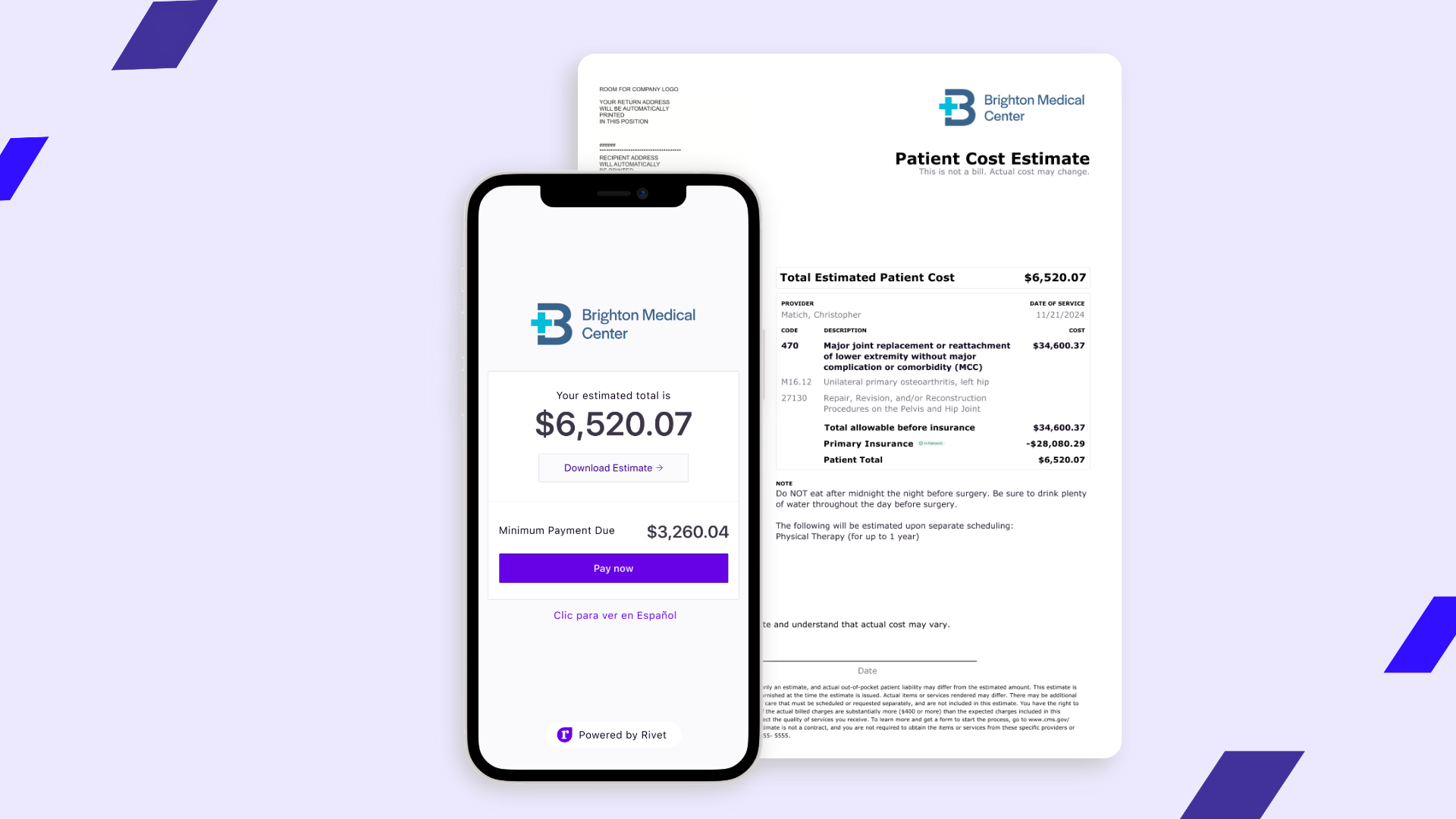
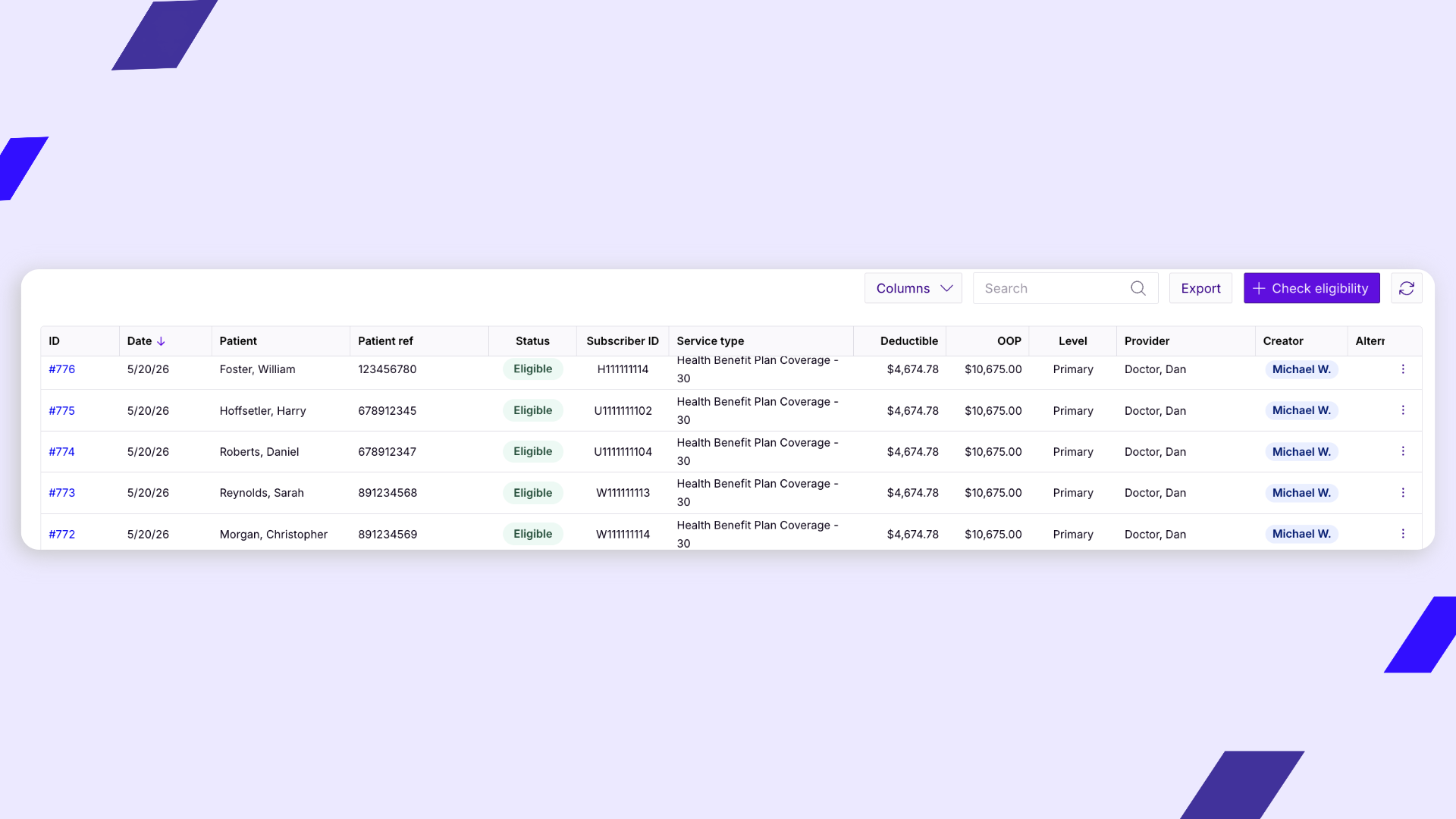
Rivet Patient Pricing automatically verifies eligibility and provides accurate patient cost estimates before upcoming appointments. Quickly notify patients digitally or in office, keep a patient estimate audit trail, and integrate with your EHR to save estimates to patient records.

Where other software stops, we begin. Optimize your patient transparency & payment now.

card-illustration-2-2x

FAQ

What is a patient cost estimate?

A patient cost estimate is a detailed breakdown of what a patient can expect to pay out-of-pocket for their healthcare services before they receive care. It shows the patient's financial responsibility after insurance coverage is applied, including their remaining deductible, copays, and coinsurance.

Unlike generic ballpark figures or Medicare rates, an accurate patient cost estimate is based on: Your practice's actual contracted rates with each payer, real-time insurance benefits (deductible met, out-of-pocket maximum), specific procedure codes for the planned treatment and complex scenarios like multiple providers, facilities, or treatments.

For patients: Cost estimates eliminate surprise bills and build trust. 65% of patients are willing to make a partial payment when given an accurate estimate at time of service.

For providers: Transparent cost estimates accelerate revenue collection and reduce bad debt. Practices using accurate estimates collect significantly more upfront—often at negative days in accounts receivable. Under the No Surprises Act, healthcare providers are required to provide federally compliant Good Faith Estimates to uninsured and self-pay patients. Non-compliance can result in penalties. Rivet automates accurate, compliant patient cost estimates in seconds—not hours. Send estimates via HIPAA-compliant text or email with easy-pay options to collect more revenue up front. 

What is a Good Faith Estimate?

A Good Faith Estimate (GFE) is a federally mandated document that healthcare providers must give to uninsured or self-pay patients before they receive care. It itemizes the expected charges for scheduled services and helps patients understand their financial responsibility upfront.
 

Good Faith Estimate requirements under the No Surprises Act

As part of the No Surprises Act's "Part II" rule, healthcare providers are legally required to provide Good Faith Estimates that include:
 
- Expected charges for all items and services related to the scheduled care
 
- Procedure codes and descriptions for planned treatments
 
- Provider and facility information (including NPIs and tax IDs)
 
- Disclaimer language explaining that actual costs may vary
 
Important: GFEs must be provided to uninsured/self-pay patients upon request or when scheduling services—and they must be delivered at least 3 business days before the appointment (or 1 business day for appointments scheduled within 3-10 days).


The compliance challenge

Creating accurate, compliant Good Faith Estimates manually is time-consuming and error-prone. Many practices struggle with:
 
- Keeping fee schedules current across multiple procedure codes
 
- Meeting delivery deadlines (3 business days before service)
 
- Ensuring all required elements are included
 
- Managing the administrative burden at scale


Rivet also handles insured patients, going beyond basic GFE compliance to provide robust, multi-treatment and multi-provider cost estimates based on actual contracted rates.

How accurate are patient cost estimates?

Patient cost estimate accuracy depends on the quality of data used to create them. Generic estimate tools that rely on Medicare fee schedules or outdated chargemasters can be off by hundreds or even thousands of dollars, leading to patient disputes and lost trust.
Rivet delivers industry-leading accuracy because we use:
 
- Your actual contracted rates with each payer (not generic Medicare rates)
 
- Real-time insurance benefits pulled directly from payers
 
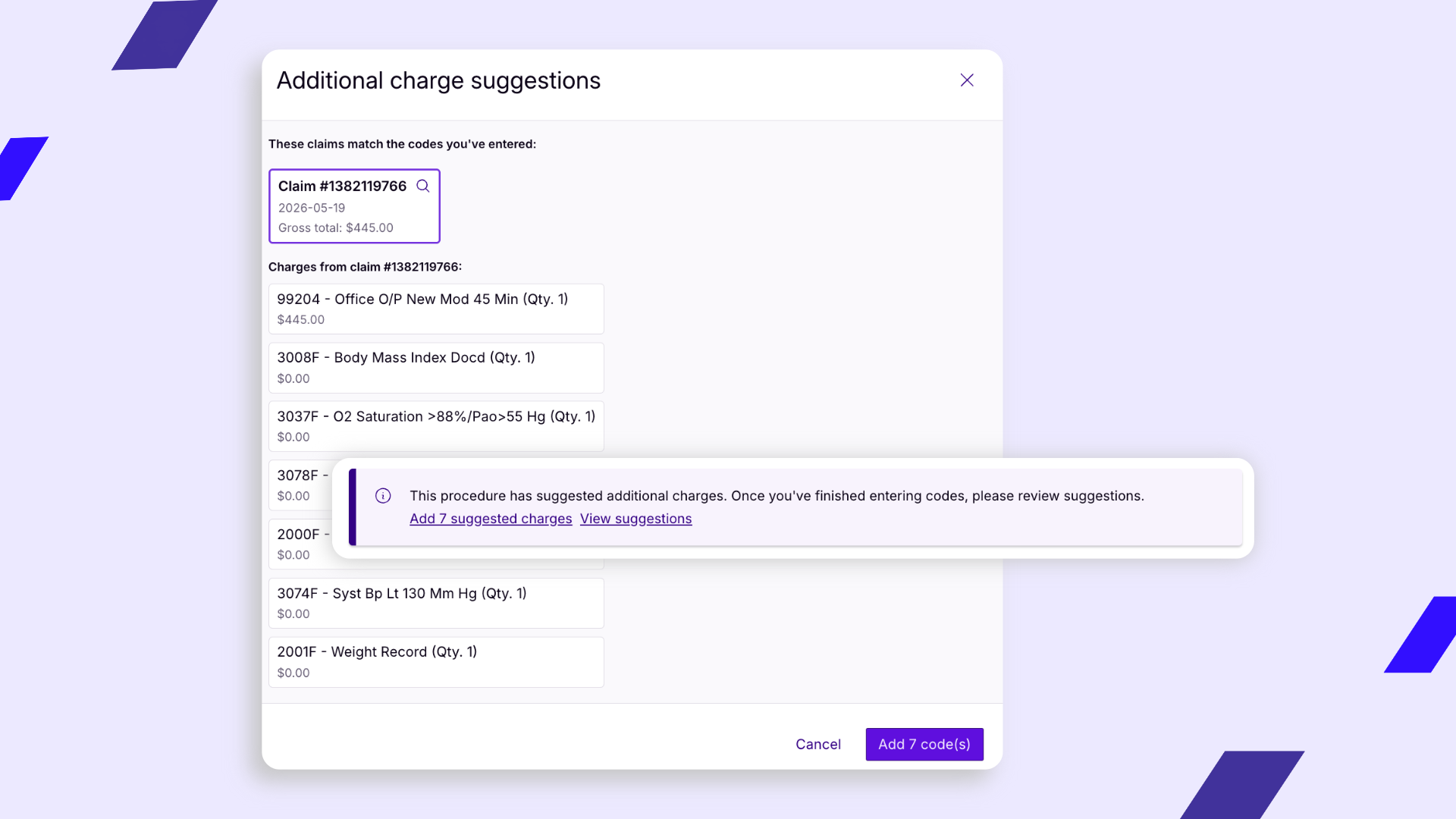
- Complex calculation logic that accounts for modifiers, multiple procedure payment reductions (MPPR), and multi-treatment scenarios
 
- Claims and remits auditing to validate and improve estimate accuracy over time
 
Rivet customers report that accurate estimates lead to fewer patient disputes, higher upfront collection rates, and stronger patient relationships. When patients trust your estimates, they're 65% more likely to make a partial payment before their appointment.
 
Bottom line: Rivet's estimates reflect what patients will actually owe, not ballpark guesses.

How do healthcare price transparency tools work?

Price transparency tools help healthcare providers give patients a clear understanding of their out-of-pocket costs before they receive care. But not all transparency tools are created equal.
 
Here's how Rivet works:
 
Step 1: Real-time eligibility verification
Rivet checks the patient's insurance benefits in seconds, pulling their current deductible, out-of-pocket maximum, copay, and coinsurance details.
 
Step 2: Accurate cost calculation
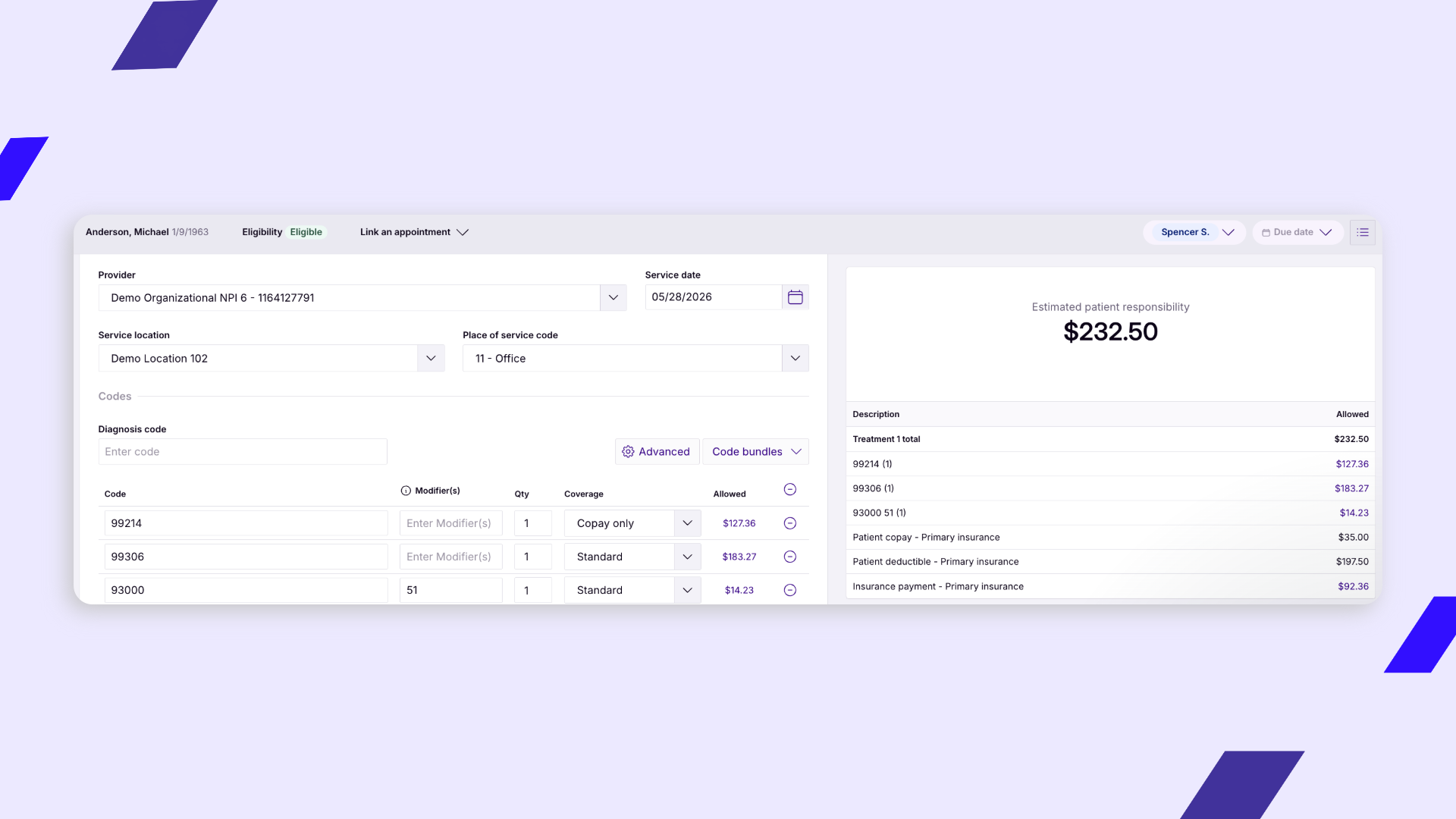
Using your practice's actual contracted rates (not generic fee schedules), Rivet calculates what the patient will owe based on the specific procedure codes, modifiers, and insurance plan details.
 
Step 3: Easy patient delivery
Estimates are sent via HIPAA-compliant text message or email with a simple, easy-to-read format. Patients can review their costs and pay directly from the link.
 
Step 4: Upfront payment collection
50% of paid estimates are processed within 36 hours. Patients appreciate the transparency, and your practice accelerates cash flow while reducing accounts receivable days.
 
Unlike basic estimators that only create a document, Rivet is a revenue acceleration platform that helps you collect more, faster, with less effort.

How long does it take to create an estimate with Rivet?

90 seconds. 3 clicks.
With Rivet, creating an accurate patient cost estimate is fast, simple, and can be done by anyone on your team.
 
Compare that to . . .
Manual calculations: 30+ minutes per estimate, prone to human error
 
EHR estimate tools: 10-15 minutes, often inaccurate because they use Medicare rates instead of your actual contracted rates
 
Calling the payer: Hours on hold just to verify benefits
 
Rivet's speed advantage comes from automation:
 
- Real-time appointment sync pulls patient demographics automatically
 
- Real-time eligibility checks verify insurance benefits in seconds
 
- Pre-built templates for common procedures streamline estimate creation
 
- Multi-treatment and multi-provider complexity is handled automatically
 
Estimates can be created automatically based on your appointment schedule. Your team reviews and sends them with one click.
 
The result? Your staff spends less time creating estimates and more time focusing on patient care. And patients get accurate cost information when they need it most, before their appointment.

Can patients pay directly from the estimate?

Yes. Every Rivet estimate includes a secure, HIPAA-compliant payment link that patients can access via text message or email.
 
Here's why this matters:
When patients receive an estimate days before their appointment, they have time to review the cost, ask questions, and arrange payment. The easier you make it for them to pay, the more likely they are to pay upfront.
Rivet's payment experience is built for speed:
 
Mobile-optimized: Patients can review and pay from their phone in under 2 minutes
 
Multiple payment methods: Credit card, debit card, and ACH options
 
Flexible payment plans: Offer partial payments or payment plans for higher-cost procedures
 
Instant confirmation: Patients receive a receipt, and the payment posts automatically to your system
 
The numbers speak for themselves:
 
50% of paid estimates are processed within 36 hours of being sent
 
67% of all estimate payments happen within 24 hours
 
Rivet customers collect 70% of patient out-of-pocket responsibility using estimates (compared to the industry average of just 7% collected at time of service).
 
Collecting upfront doesn't just improve cash flow. It reduces bad debt, shortens accounts receivable days (many Rivet customers operate at negative A/R days), and creates a better patient experience.
 

What makes Rivet different from free EHR estimate tools?

Free tools spit out Medicare rates. Rivet calculates what you'll actually get paid. There's a million-dollar difference.
 
Here's the breakdown:

Free EHR estimate tools:

Use basic Medicare or self-pay rates (not your actual contracted rates)
Don't account for modifiers, MPPR, or multi-treatment complexity
Require manual fee schedule maintenance (you're on your own to keep it current)
No payment integration (creating the estimate is where it ends)
DIY configuration and troubleshooting (no expert support)

Rivet:

Uses your actual contracted rates with each payer
Handles complex scenarios (multi-provider, multi-facility, multi-treatment, secondary insurance)
Automated eligibility and estimate workflow with EHR integration
Payment collection built in (HIPAA-compliant text and email with one-click payment)
Expert partnership (our team handles contract modeling, data entry, and ongoing support)
Claims and remits auditing to validate and improve estimate accuracy over time


The real difference:

Your EHR gives you a tool. Rivet gives you a revenue acceleration platform with expert partnership.
 
Free estimate tools might save you the cost of a software subscription, but they cost you in lost revenue, staff time, patient disputes, and compliance risk. Rivet customers collect 70% more patient responsibility and operate at negative A/R days.
 
Ask yourself: How much revenue are you leaving on the table with inaccurate estimates?

Precollect confidently.

It’s time to have clearer cost conversations with patients. It’s time for Rivet.

card-illustration-3-2x

Learn more about Revenue Cycle Management

  • How to Deal with “Lesser of” Language in Payer Contracts

    Read More
  • Healthcare Burnout: Symptoms and Potential Treatments

    Read More
  • No Surprises Act: Independent Dispute Resolution Process

    Read More
  • Developing Best Practices for Medical Patient Payment Plans

    Read More
  • Self-service

    7 Ways You Can Bring Patient Self-Service into Your Practice

    Read More
  • Tackling Prior Authorization Pain Points: Solutions for Healthcare Providers

    Read More