Understand the reasons behind denials.
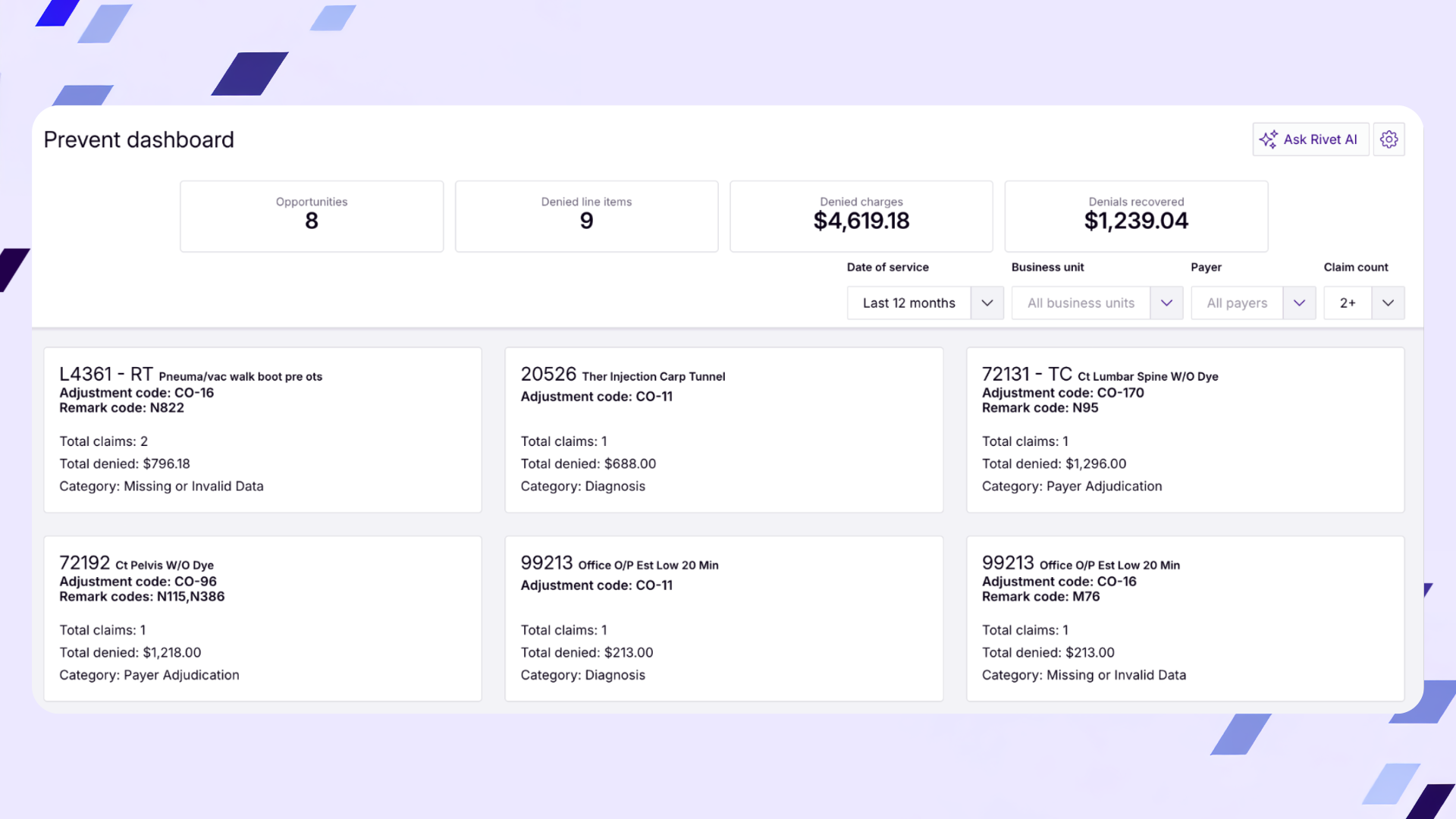
Dive into why claims were eventually paid.
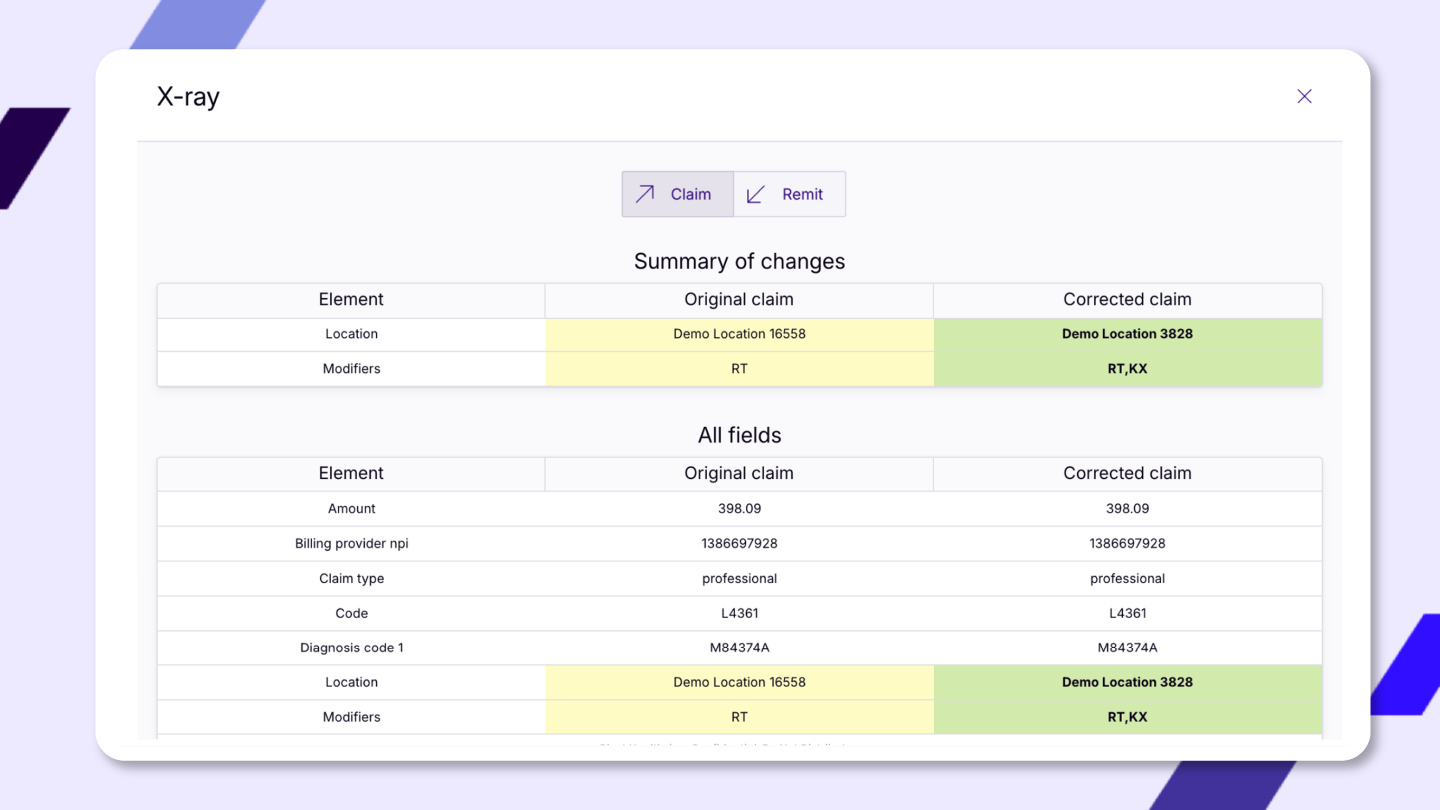
Break down, categorize and analyze denial reasons.
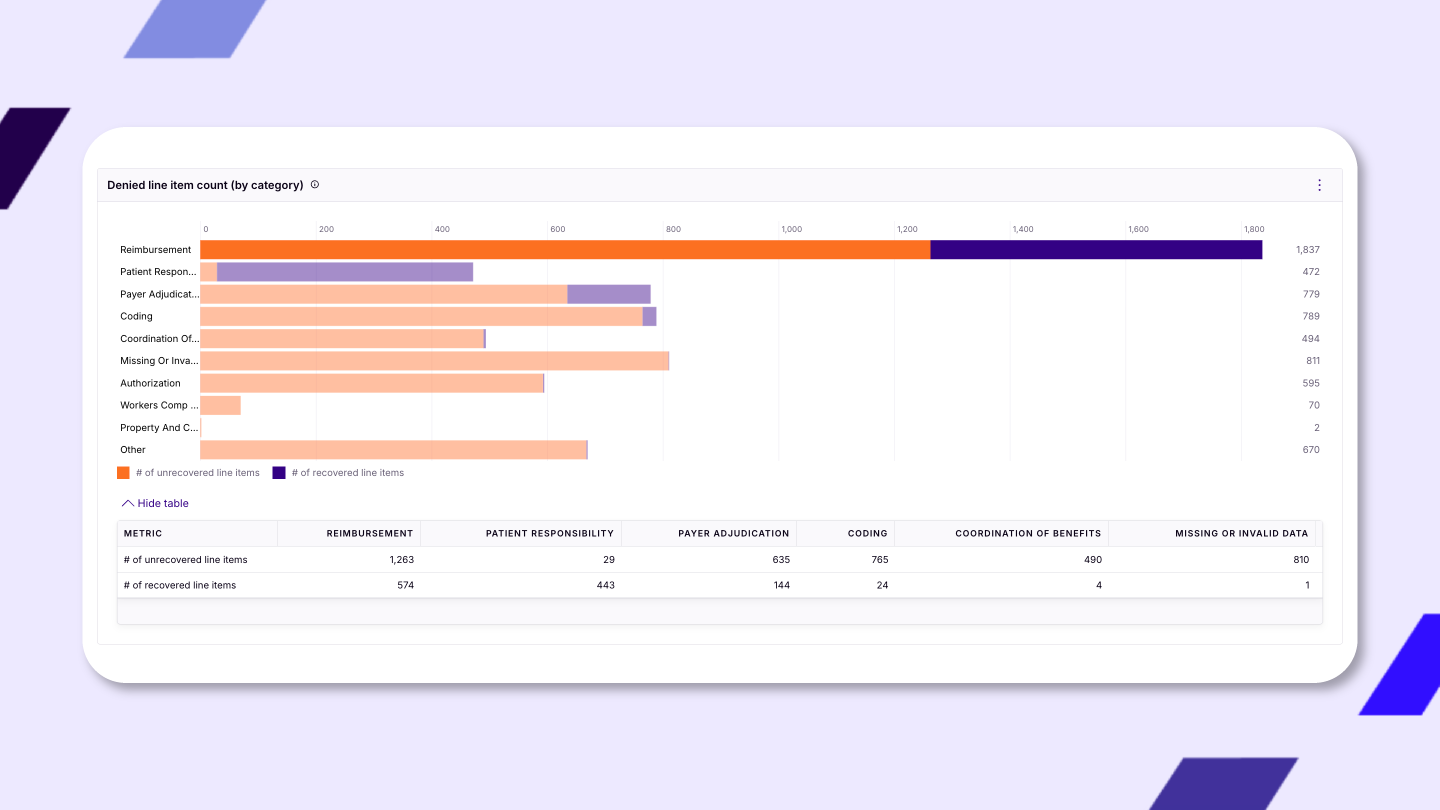
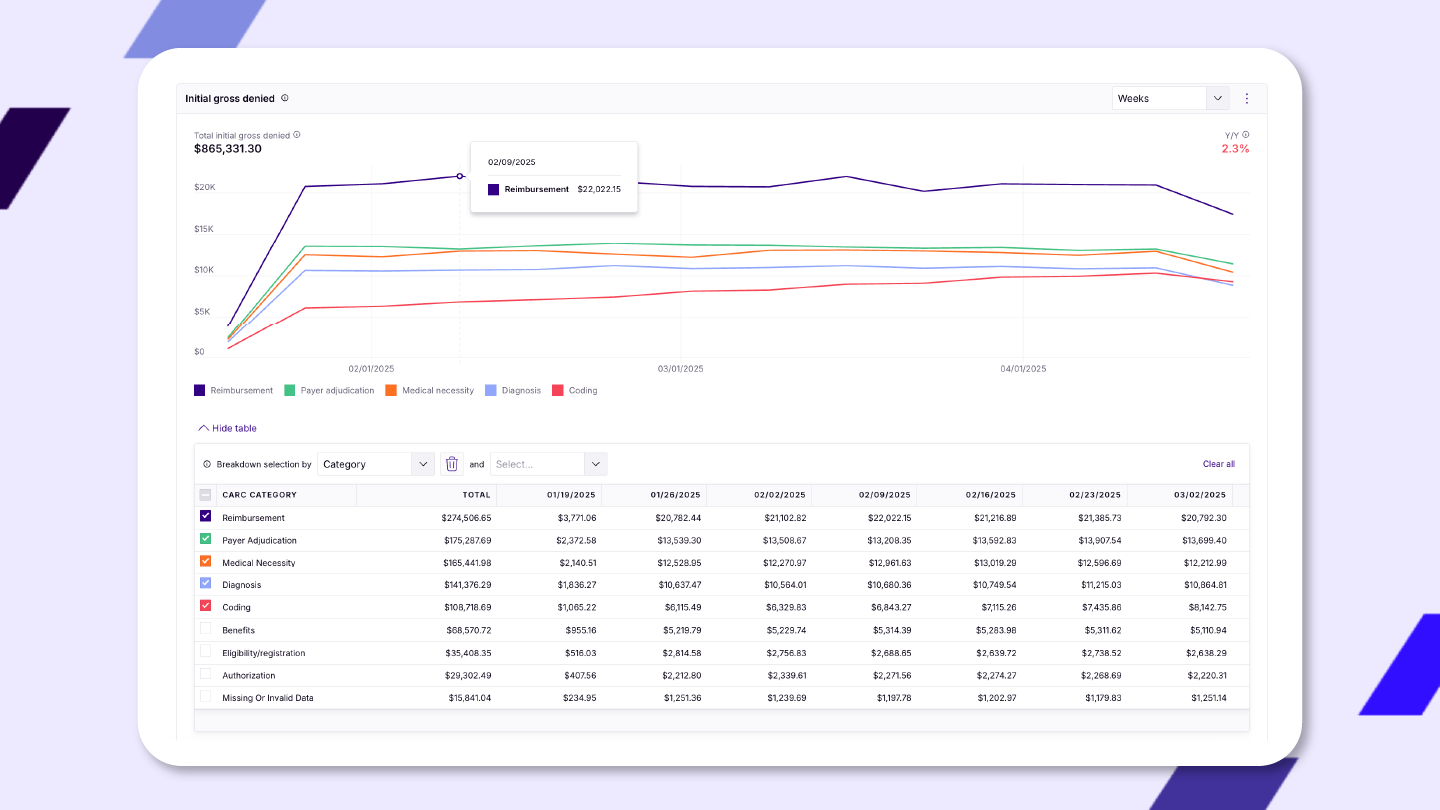
Narrow denial scope to understand reimbursement loss.

837s (claims sent to payer)
835s (remits sent to practice)
Historical claims data
Compare hundreds of millions of historical claims and remits
Identify billing and submission errors automatically
Group similar denials by root cause
Surface actionable insights on an easy-to-digest dashboard
Diagnosis code changes
Modifier additions or changes
Diagnosis pointer corrections
Documentation requirements
Decreased initial denial rate
Increased clean claim rate / first-pass acceptance
Accelerated cash flow
Decreased cost to collect
Improved denial recovery rate




"Rivet is a revenue cycle must-have. We can accomplish more — faster — using Rivet than anything else out there," said Andi Wilkinson, RCM Supervisor at Austin Retina Associates
“The analytics tools in Rivet show reimbursement trends blocking revenue. I can filter and manipulate the data from the big picture insights to individual claims, which makes systemic changes simple and puts us in a better position in insurance partner discussions.
“Rivet is a revenue cycle must-have. We can accomplish more — faster — using Rivet than anything else out there.”

"Rivet gives an inclusive view of all of our claims in one place, at one time. It truly is the one-stop shop for revenue analytics," said Amanda Hager, RCM Supervisor at Generations Family Practice.
“Rivet gives an inclusive view of all of our claims in one place, at one time. It truly is the one-stop shop for revenue analytics. I can do it all on an easy-to-use platform that I can turn to at any time.”
Amanda Hager said multiple EMRs weren't an issue. In fact, “Rivet allowed us to funnel all our data from multiple platforms into a single software that gave us the insight to empower our revenue cycle. We couldn’t be happier with the result.”
The result, as it happens, is that Generations Family Practice has discovered (and mostly recovered) $250K in payment discrepancies and recovered over $90K from denials using Rivet.
“Having a deep visibility into underpayments and denials and knowing where to push back on appeals has been crucial in getting paid. We were able to discover and recover thousands of dollars of what would have been lost revenue because of Rivet.”
Hager couldn't say enough about how Rivet's "one-stop shop" has influenced her team.
“There are a thousand reasons to use Rivet, but the main one that we enjoy is the transparency into our claims. In seconds we’re able to deep dive into our denials, underpayments, overpayments, and claim trends. The data is all there and I can analyze it without having to spend any manual effort.”
Rivet Revenue Diagnostics does more than build a denials prevention engine. Gain a confident picture of your financial health in real-time with customized analytics, reports and net revenue projection dashboards. Explore the financial impact of your underpayments and denials, removing future denials with our robust AI powered denials prevention engine.
Where other software stops, we begin. Optimize your KPI management now.

Explore how advanced analytics and AI-powered prevention tools can transform your revenue cycle from reactive to proactive with Rivet.









.png?width=1920&height=1080&name=Unlock%20a%20Denials%20Prevention%20Engine2%20(1).png)