Accurate
Revenue Analytics
Start Here
Use financial x-ray vision to gain a pulse on your revenue analytics to accurately forecast net revenue and prevent denials.

Gain x-ray vision of your financial health starting now.

Rivet Revenue Diagnostics Offers
Intro to RevD on RevD page-2 (2)

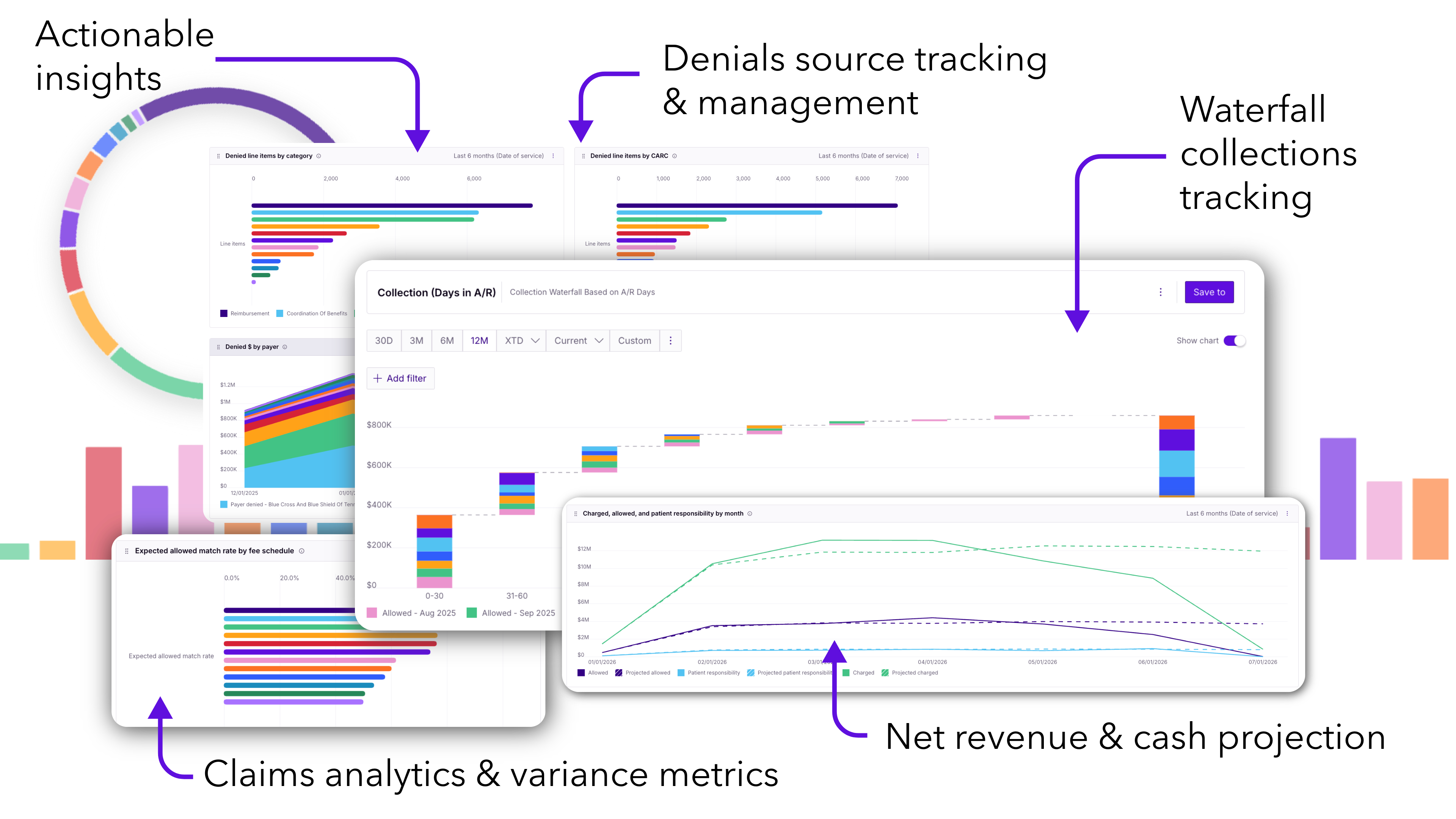
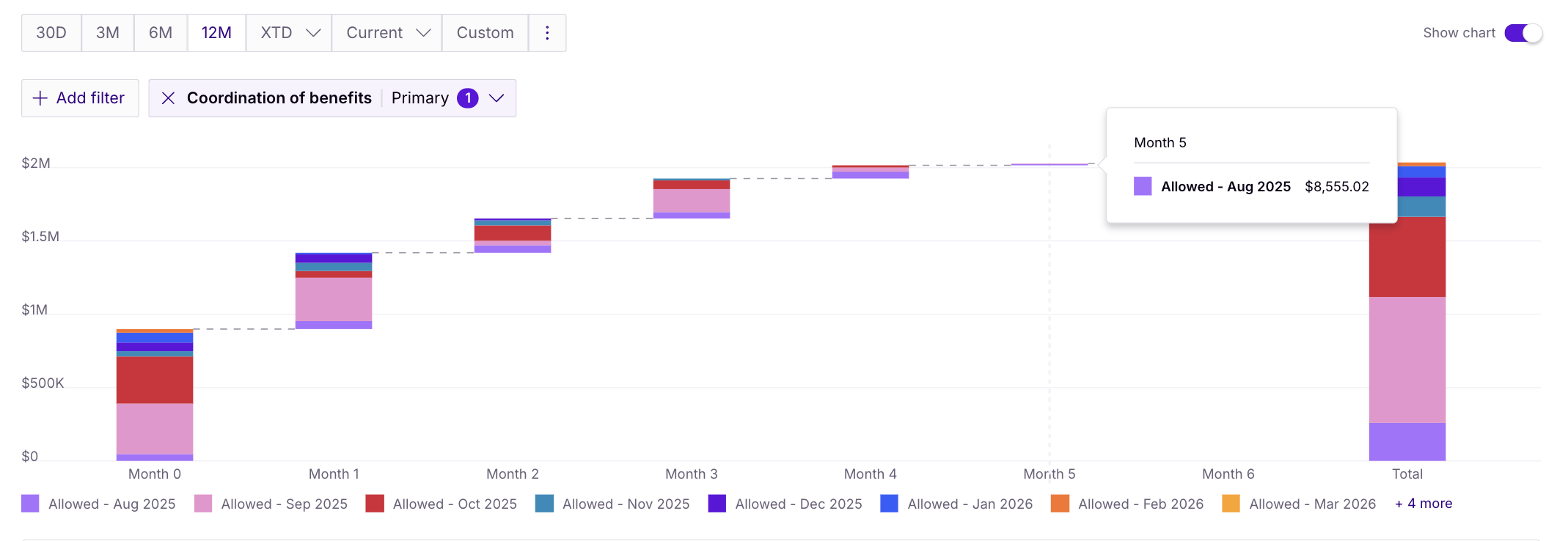
Collections Waterfall Visualization

  • Track every revenue collection stage with heat mapping
  • Identify bottlenecks and risk areas in real time
  • Visualize when revenue will be collected month by month
  • Percentage views show where cash is stuck
  • Drill down into claims at any stage of revenue flow
See a demo
Denials
Denials

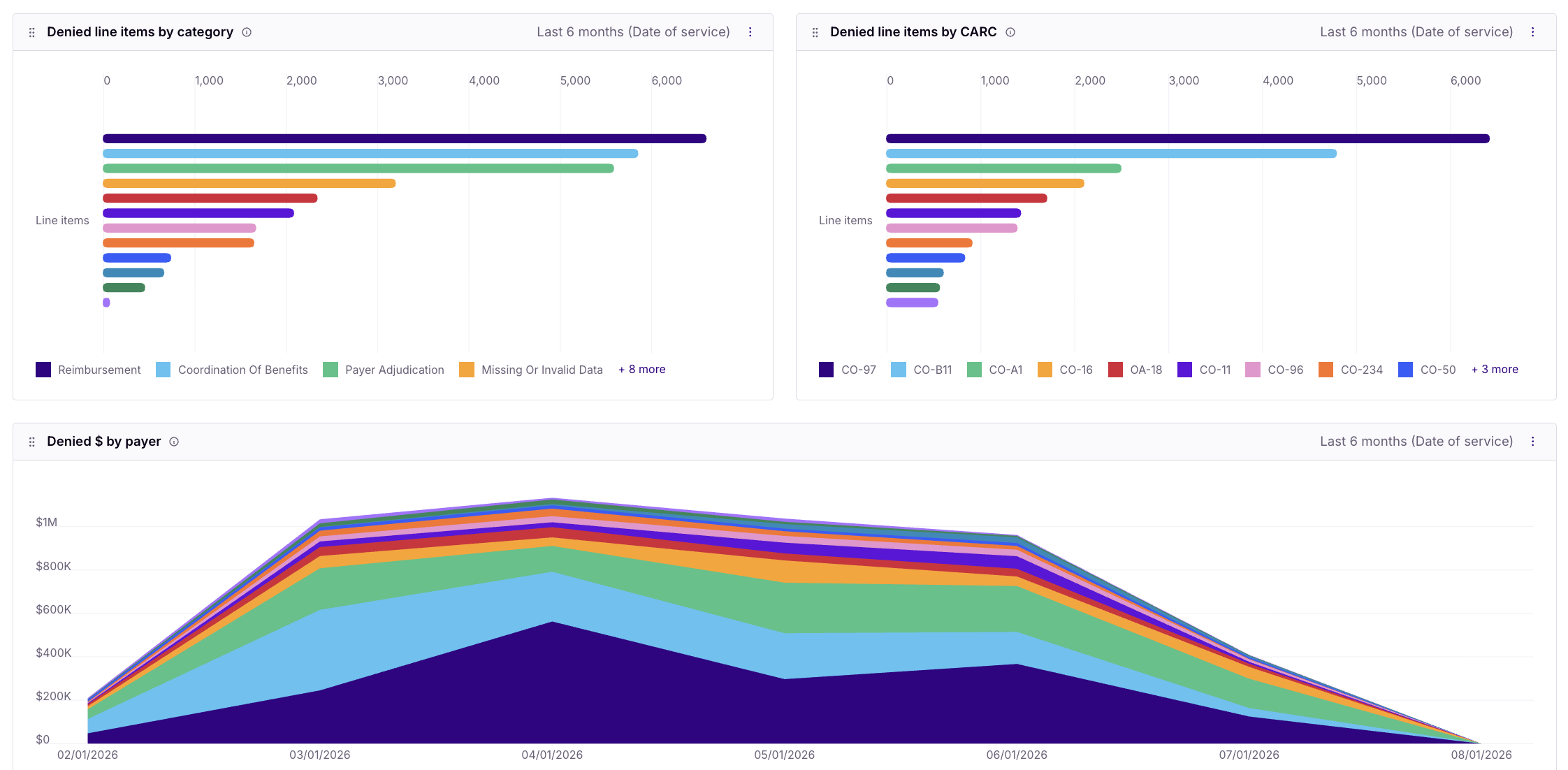
AI-Powered Denials Prevention

  • Automatic root cause analysis
  • Billing edit suggestions to outsmart auto-denial systems
  • Diagnosis pointer breakdowns to catch errors
  • Denial trend analysis by provider, payer, and procedure code
  • Worklist automation prioritizes highest-dollar recovery opportunities
See a demo
Variance
Variance

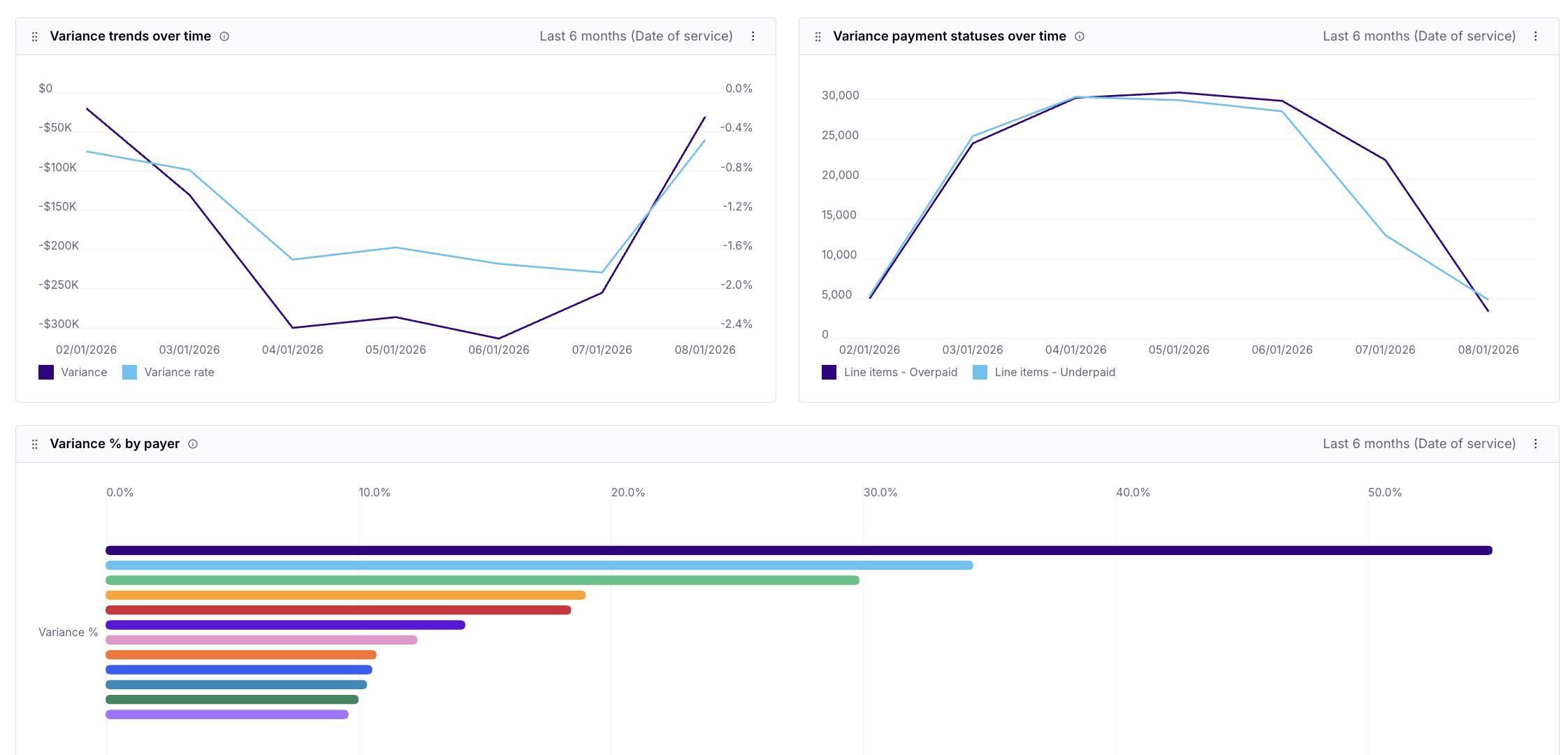
Underpayment Detection

  • Multiple expected-amount calculations (historical, hybrid & likelihood to pay)
  • Auto-detection of payment variances beyond simple contracted rates
  • Identify missed escalators, modifier issues, and credential errors
  • Underpayment trend analysis with suggested recovery projects
  • Track speed-to-pay and adjudication cycle performance
See a demo
Screenshot 2026-08-24 at 9.18.28 AM

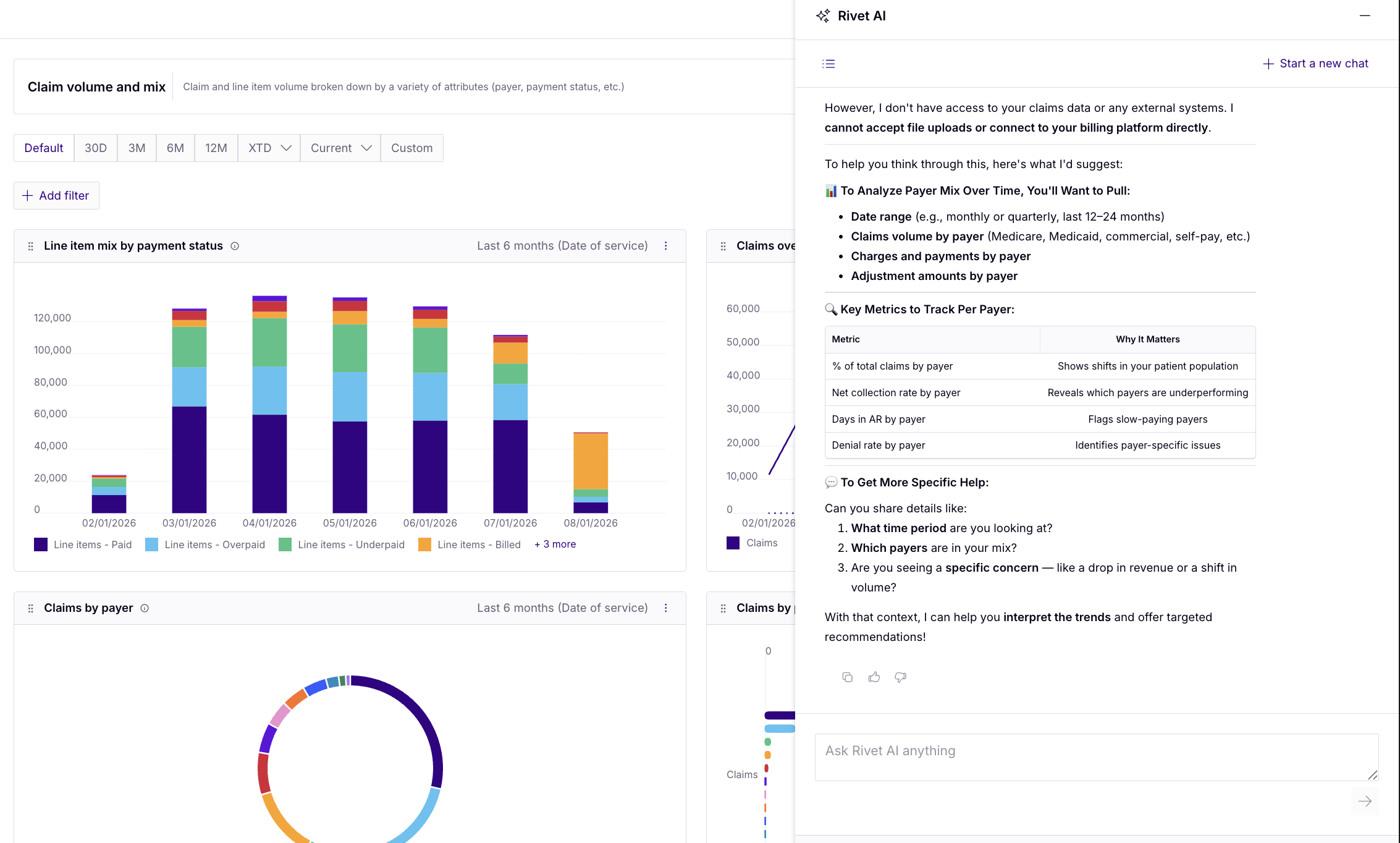
Instant Custom Dashboards

  • AI-assisted chart building
  • Pre-built templates for common revenue cycle use cases
  • Flow and funnel charts track claims through payment statuses
  • Drill into the claims behind any chart for detailed investigation
  • Schedule recurring email reports to stakeholders automatically
See a demo
Screenshot 2026-08-24 at 7.01.28 AM

Real-Time Revenue Intelligence

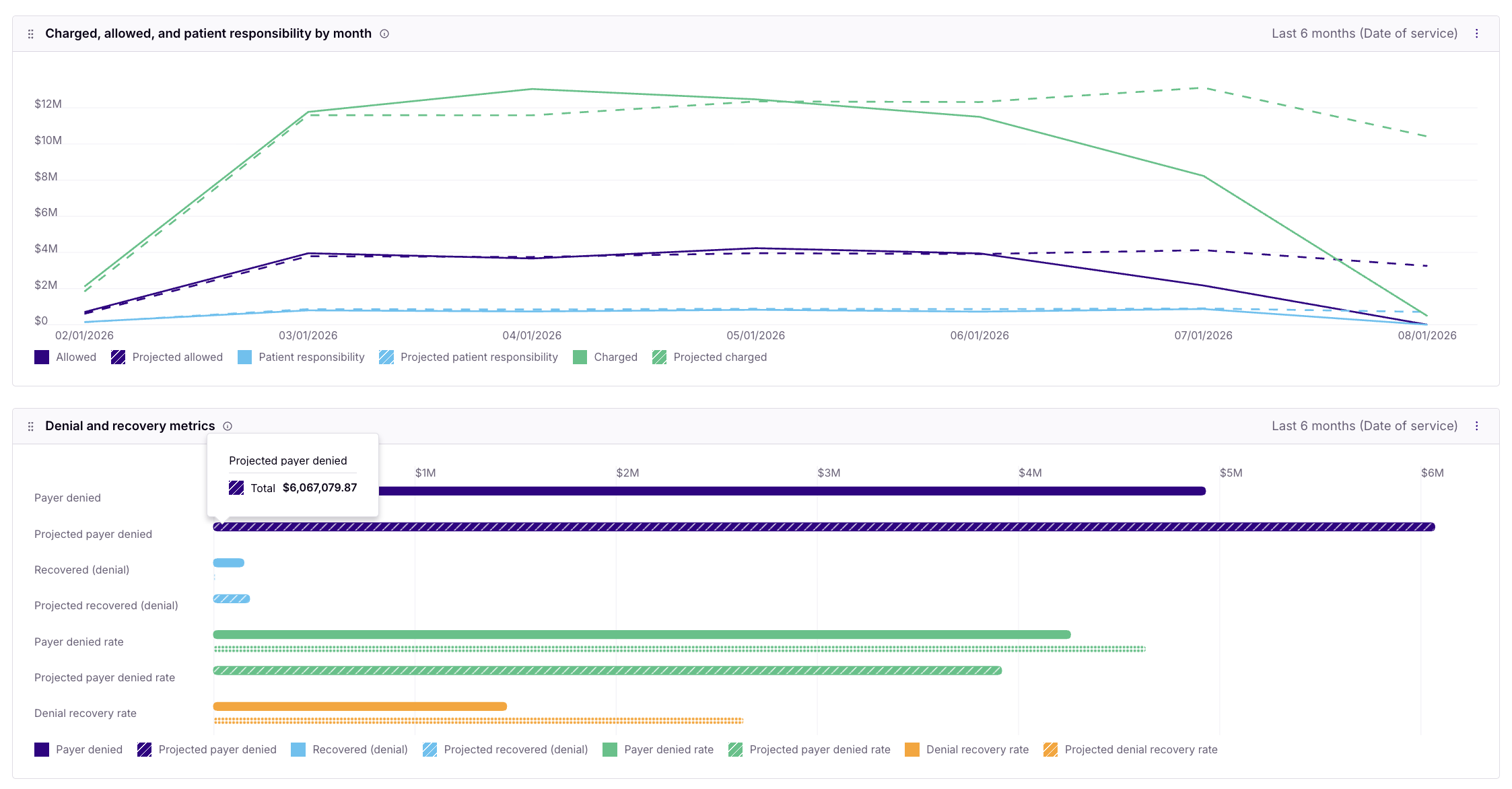
  • Customizable net revenue projection using linear regression models
  • Dynamic forecasting updated constantly as new data arrives
  • Revenue analysis by Date of Service and Date of Payment
  • Payment time-horizon expectations with confidence intervals
  • Custom modeling capabilities and metric groupings
  • Net Collection Rate and advanced KPI tracking
It's time to get the answers you need to build the business you want.
Learn More
Get Started with Revenue Diagnostics

Understand. Diagnose. Treat.

Intro to RevD on RevD page-2x

revenue-cycle-2x

20%+

YOY reduction in denial rates

g5730

16%+

More denials recovered

paperwork-2

20%

More claims worked

Asset 5@x-Jan-26-2024-07-43-15-9774-PM

Stop revenue leakage before it starts

See exactly where your revenue goes with Rivet's collections waterfall—a visual heat map of revenue risk that tracks every dollar from claim submission through final payment. Identify bottlenecks in real time and catch underpayments before they slip through the cracks. While other platforms tell you what happened last month, Rivet shows you what's happening right now.

- Collections workflow visualization with heat mapping for risk identification

- Track revenue flow through adjudication, payment, and collection stages

- Month-by-month cash flow forecasting with percentage views

- Customizable dashboards built in seconds with AI assistance
waterfall collection chart_0826
Screenshot 2026-08-24 at 6.44.57 AM
Asset 6@x-2

Prevent denials with AI-powered root cause analysis

90% of denials are avoidable—and Rivet's AI identifies exactly why they're happening before your next batch goes out. Get actionable insights on diagnosis pointer errors, billing edit suggestions, and claim-specific fixes that maximize your clean claim rate from the start.

- Automatic root cause analysis for every avoidable denial

- Denial trend analysis across providers, payers, and procedure codes

- Worklist automation prioritizes your highest-dollar recovery opportunities

- Billing edits catch errors before claims leave your system

The average Rivet customer sees a 20% year-over-year denial reduction.

Asset 8@x-3

Find underpayments others miss

Not all underpayments are obvious. Rivet's advanced expected-amount calculations (historical, hybrid, and likelihood to pay metrics) detect payment variances that traditional contracted-rate comparisons miss—including missed escalators, modifier issues, and incorrect rendering credentials.

- Payment variance detection with automated project suggestions

- Compare actual vs. expected reimbursement using multiple calculation methods

- Drill down by payer, location, provider, and procedure code

- Track payer speed-to-pay and adjudication cycle performance

Screenshot 2026-08-24 at 6.55.44 AM
Forecasted
icon-rivet-3

Forecast net revenue with real-time data

Dynamic revenue forecasting combines your historical performance and contracted rates with real-time claim data; so your projections update constantly as new information comes in. Build custom models, group metrics your way, and generate downloadable reports for leadership in seconds.

- Customizable real-time net revenue projection using linear regression

- Revenue analysis by Date of Service and Date of Payment

- Payment time-horizon expectations with confidence intervals

- Recurring email reports scheduled automatically to stakeholders

Join hundreds of practices analyzing & adding revenue
Schedule a demo
What our customers say about our revenue cycle management solutions

Revenue cycle intelligence starts now.

  • Revenue Cycle Management for Plastic & Reconstructive Surgery

    Read More
  • Revenue Cycle Management for Radiology

    Read More
  • Mastering Revenue Cycle Management for Pediatric Practices

    Read More
  • Revenue Cycle Management for Anesthesiology

    Read More
  • Revenue Cycle Management for Nephrology Practices

    Read More
  • Revenue Cycle Management for Emergency Medicine Practices

    Read More

How does RCM work?

Healthcare Revenue Cycle Management (RCM) software simplifies and streamlines the billing and financial process for healthcare providers. It automates key steps like denial management, patient billing, error reduction and efficiency improvement. Rivet is a healthcare RCM software that leverages AI technology to offer denials prevention, payer contract comparison and management, reimbursement key performance indicator (KPI) reports and analytics, underpayment detection and workflows, patient cost estimates with insurance eligibility verification, and pre-collections management

Why is revenue cycle management important in healthcare?

Healthcare practices need software additional to their Practice Management (PM) system or Electronic Medical Records (EMR) platform to effectively manage revenue cycle operations because cost margins are slim and overhead cost is high. Healthcare Revenue Cycle Management solutions ensure accurate billing, efficient claim management, and proper reimbursement from patients and payers. Efficient RCM solutions should also provide revenue integrity (such as denials management and prevention), optimize contractual reimbursement from insurance payers, and enable practices to focus on patient care. 

Can I measure healthcare KPIs?

Advanced revenue cycle management software (Rivet) provides dashboard visuals and analytics to dive into your Key Performance Indicators (KPIs) which focus on key areas like revenue cycle management and profitability. Each KPI can be looked at for a set amount of time such as a month, quarter, and year. 

Financial health is measured through KPI criteria such as the following:

How is data analytics software used in healthcare​?

Process large volumes of financial and operational metrics with Rivet healthcare revenue analytics and revenue cycle management software. Revenue managers easily execute financial strategic initiatives by first auditing and analyzing complex historical, real-time, and projected revenue in Rivet. Then managers review and pivot as needed in seconds with empowered, HIPAA compliant, AI-driven technology. Use automation for charts and tables to get both a bird's eye view of operations as a whole, with the capability to focus data all the way down to specific claims to uncover trends with denials, underpayments, claim volume, payer mix, etc.